
The integration of artificial intelligence into everyday applications has become a defining feature of our era. Koodall AI stands at the forefront of this innovation, offering cutting-edge solutions like the Video Editor SDK/API, a Face AR SDK for applying dynamic effects akin to those on popular social media platforms, and "Glow Tryon," a revolutionary makeup try-on SDK.
While these advancements unlock new possibilities for user engagement and personalized experiences, they also bring forth critical considerations regarding user privacy and data protection. In particular, the processing of facial images and biometric data necessitates a careful alignment with regulations such as the General Data Protection Regulation (GDPR) in the European Union.
In this article, we delve into the delicate balance between technological innovation and privacy protection. We explore how Koodall AI's products operate within the legal frameworks that govern personal data, ensuring that the use of face tracking, analysis, and recognition technologies is both ethical and compliant.
Understanding Face Tracking vs. Face Recognition
Before we delve into the legal implications, it's essential to distinguish between face tracking and face recognition—a distinction that is pivotal in understanding how Koodall AI's products function.
Face Tracking involves detecting and monitoring facial features in real-time. Koodall AI's Face AR SDK leverages this technology to apply dynamic effects to users' faces, enabling interactive experiences without necessarily identifying the individual. The SDK tracks facial landmarks such as eyes, nose, and mouth positions to overlay effects seamlessly, enhancing applications in entertainment, virtual try-ons, and more.
Face Recognition, on the other hand, involves identifying or verifying a person's identity using their facial features. This process creates a biometric template—a unique digital representation of someone's face—which can be compared against stored templates for verification or identification purposes.
Understanding this distinction is crucial because it directly impacts how personal data is handled and the regulatory requirements that apply.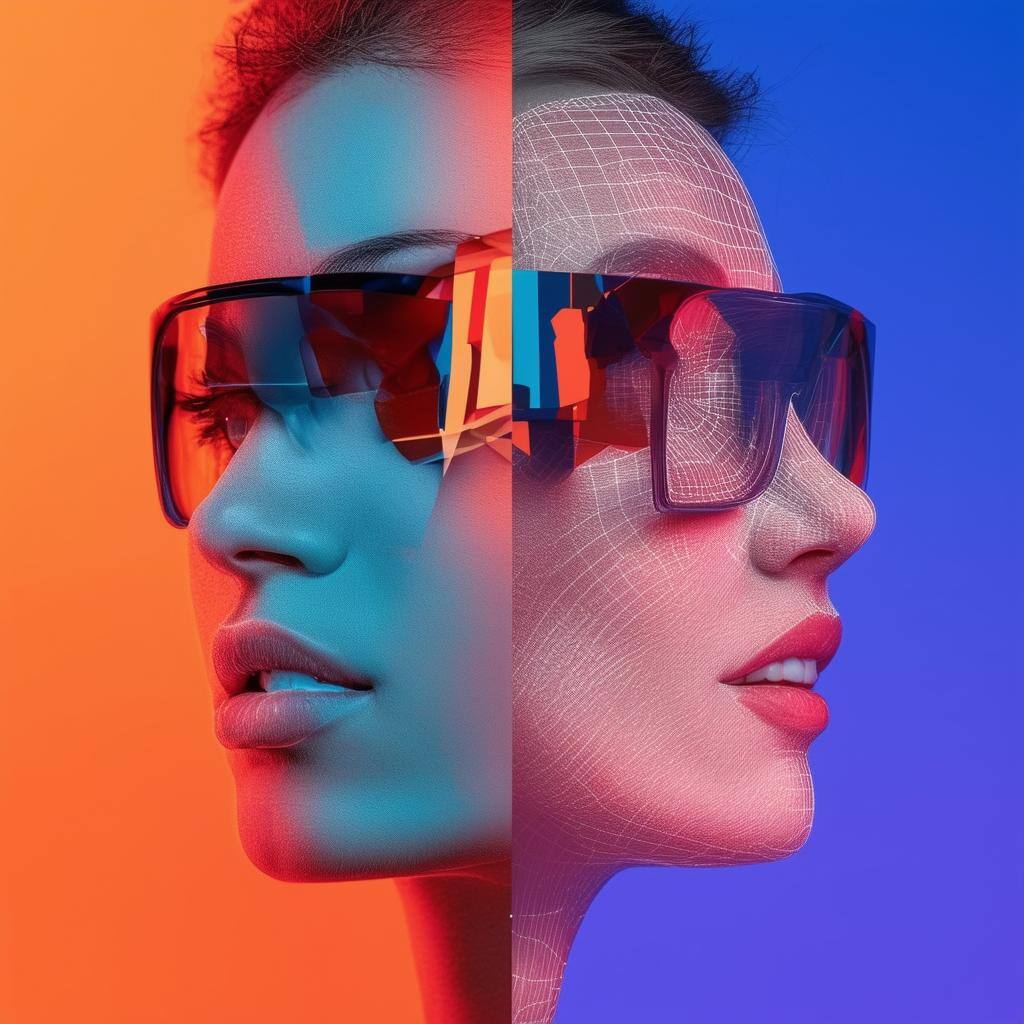
The Ethical Landscape of Face Recognition and GDPR Compliance
What is GDPR?
The General Data Protection Regulation (GDPR) is a comprehensive data protection law enacted by the European Union in 2018. Its primary aim is to give individuals control over their personal data and to harmonize data privacy laws across Europe. GDPR sets stringent guidelines for organizations that process personal data, emphasizing transparency, security, and accountability.
Personal Data vs. Non-Personal Data
Under GDPR, personal data refers to any information relating to an identified or identifiable natural person. This includes names, identification numbers, location data, and even online identifiers like IP addresses. When data cannot be linked to an individual in any reasonable manner, it is considered anonymous data, which falls outside the scope of GDPR.
In the context of Koodall AI's technologies:
- Face Tracking Data: Generally considered non-personal when it cannot be used to identify an individual.
- Biometric Data: Includes unique facial features used for identification and is treated as a special category of personal data under GDPR.
Biometric Data and Its Implications
Biometric data, as defined by GDPR, involves personal data resulting from specific technical processing related to physical, physiological, or behavioral characteristics. This data allows for the unique identification of an individual, such as facial recognition templates.
Processing biometric data is subject to more stringent requirements, including:
- Obtaining explicit consent from the data subject.
- Ensuring data is processed for specified, explicit, and legitimate purposes.
- Implementing robust security measures to protect the data.
Koodall AI's Commitment to GDPR Compliance
Koodall AI is deeply committed to ensuring that its products are utilized in a manner that respects user privacy and complies with GDPR regulations.

How Koodall AI's Products Align with GDPR
- Processing Data Responsibly: Koodall AI's SDKs are designed to process data locally on the user's device whenever possible, minimizing the need to transfer personal data over networks.
- Data Minimization: The technologies focus on using only the data necessary for the intended functionality. For instance, the Face AR SDK tracks facial features without storing or transmitting identifiable information.
- Explicit Consent: Applications built using Koodall AI's SDKs should incorporate mechanisms to obtain explicit user consent, especially when processing biometric data for features like "Glow Tryon."
- Transparency: Koodall AI encourages developers to provide clear and accessible privacy notices, informing users about what data is collected and how it is used.
- Security Measures: Robust encryption and security protocols are recommended to protect data processed by the SDKs, safeguarding against unauthorized access.
Implementing Best Practices with Koodall AI's SDKs
Developers and organizations leveraging Koodall AI's technologies should adhere to the following best practices:
- Legal Ground for Processing: Ensure that there is a valid legal basis for processing personal data, such as user consent or legitimate interest.
- User Rights: Facilitate the exercise of user rights under GDPR, including access to data, rectification, erasure, and the right to object to processing.
- Data Protection Impact Assessment (DPIA): Conduct DPIAs when implementing technologies that process biometric data to assess and mitigate privacy risks.
- Privacy by Design: Integrate data protection principles into the development of applications from the outset.
Technical Insights into AI and Computer Vision
Understanding the technical aspects of Koodall AI's products can further clarify how they align with privacy regulations.
How Face Tracking Works
Face tracking utilizes computer vision algorithms to detect and monitor facial features in real-time. Techniques involve:
- Facial Landmark Detection: Identifying key points on the face, such as the corners of the eyes, nose tip, and mouth edges.
- 3D Modeling: Creating a mathematical model of the face's structure to apply effects that move naturally with facial expressions.
These processes can be executed without storing personal data, as they focus on geometric configurations rather than identity.
The Role of Machine Learning
Koodall AI's SDKs employ machine learning models trained on large datasets to recognize patterns and features. With techniques like convolutional neural networks (CNNs), the models can:
- Apply Filters and Effects: Recognize facial features to overlay digital effects accurately.
- Estimate Facial Attributes: Determine aspects like age range or emotional expression without identifying the person.
Ensuring Privacy Through Technical Design
- On-Device Processing: By performing computations on the user's device, data remains under the user's control, reducing privacy risks.
- Data Anonymization: Techniques like hashing or encryption can anonymize data when storage or transmission is necessary.
- Limited Data Retention: Implementing policies to discard data immediately after processing prevents unnecessary accumulation of personal data.
Conclusion
Koodall AI is committed to pioneering advancements in AI and computer vision while upholding the highest standards of privacy and data protection. By understanding the ethical and legal considerations surrounding face tracking and recognition, developers and organizations can leverage Koodall AI's innovative SDKs to create engaging, personalized experiences that respect user privacy.
In a world where AI technologies are becoming increasingly integrated into our lives, balancing innovation with privacy isn't just a regulatory requirement—it's a fundamental responsibility. Koodall AI invites you to join us in navigating this landscape thoughtfully and responsibly, ensuring that we build a future where technological progress and individual rights go hand in hand.